
The short answer
A preference quiz can suggest which test to try first, but it cannot replace timed diagnostics. Answer the six questions below, then validate the result with current official SAT and ACT materials on separate, rested days.
Key facts
- A quiz narrows the choice; a timed practice test of each settles it.
- Pacing tolerance is the single biggest practical difference between the tests.
- Taking both properly costs twice the preparation for little added benefit.
- Colleges accept either test, so the decision is about fit, not admissions strategy.
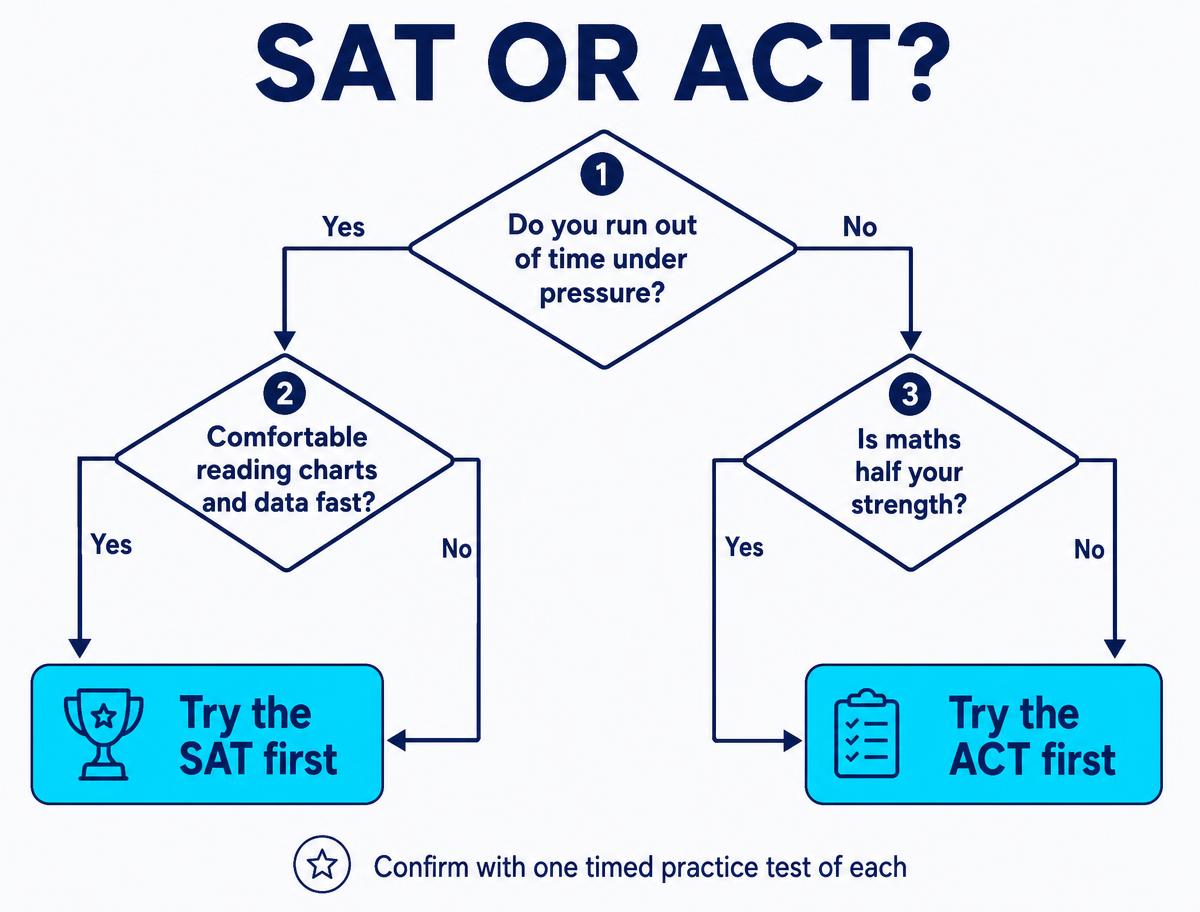
Six-question preference check
Select every statement that sounds like you, then view your starting suggestion.
Use preference as a starting hypothesis
The quiz weighs format and pacing preferences. It does not estimate a score, account for accommodations or know how a specific question mix will feel. A tie is a useful result: it means diagnostics should decide.
Focus on differences that change performance
The Digital SAT is adaptive by section and generally provides more time per question. The enhanced ACT is linear, has a faster pace and offers an optional Science section. Both require current official materials because their formats have changed over time.
Validate the result fairly
Take the tests on separate days using current official timing. Compare percentile, unfinished questions, rushed errors and the amount of unfamiliar content. A small raw-score difference across unlike scales is not meaningful by itself.
- Use the same device conditions where possible.
- Record where time pressure first appears.
- Compare the work needed, not only the starting score.
Commit for one complete cycle
Once the evidence points to a test, follow one focused plan long enough to learn its timing and patterns. Reconsider only when several weeks of targeted work produce new evidence.
Check the quiz result against real timing
A quiz describes preferences you report, not your accuracy under a clock. If it points to the SAT, take a current official SAT practice test first; if it points to the ACT, start there. Then take the other test under comparable, rested conditions before committing a full study cycle.
Record where you guessed, skipped or lost control of the pace. A close score comparison is not a verdict; a repeatable cluster of errors may tell you which test offers the clearer route to improvement. Use current official concordance rather than comparing SAT and ACT numbers directly.
- Treat the quiz as a test-order suggestion.
- Use official practice for both exams.
- Compare normalized results and the work needed to improve.
Questions people ask
- How reliable is a SAT or ACT quiz?
- It is a starting point based on how you describe your own working style. It cannot see your actual accuracy under time pressure. Use it to pick which practice test to sit first, then let the results decide.
- Can I just take both?
- You can, but preparing properly for two tests usually means preparing adequately for neither. Unless a first sitting of each shows a genuine tie, pick one and put the time there.
- What if the quiz result surprises me?
- Sit a timed practice test of the suggested exam anyway. Surprises often come from assumptions about what a test involves rather than about how you would perform. Real results settle it either way.
Choosing between the SAT and ACT
More in this series
Sources and further reading
Your next useful step
Turn this guide into focused practice.
How this guide is made
Sourced, reviewed and clear about uncertainty.
The ExamScore Editorial Team checks exam facts against the primary sources listed in each guide, labels ExamScore recommendations as guidance, and updates material when official formats or policies change. We do not publish guaranteed score gains.
Continue reading